





Atmospheric physics
Most relevant keywords: atmosphere, climate, modeling, dynamics, lightning, electricity, infrasound, greenhouse gases, measurements
Atmospheric physics aims at studying the atmosphere of planets with an emphasis on the Earth’s atmosphere. The corresponding work includes quantitative characterization of the physical properties of this region, understanding and interpretation of the processes therein using the laws of physics, putting the experiences into context in the complex system of nature as a whole, and seeking possibilities of utilization of the new information for the benefit of mankind.
Research in the field of atmospheric physics has been an integral part of the scientific activity of the institute since its establishment. The investigations have been focused on the middle and upper atmosphere to study the interactions between the neutral atmosphere and the near-Earth space environment on the one hand, and, on the other hand, specifically those electrical processes of the atmosphere which take place below an altitude of ca. 100 km.
A significant fraction of our research work is based on measurements managed by the institute. As the measuring infrastructure has been extended over the years, new research directions were accommodated in the institute within the field of atmospheric physics. These include studying greenhouse gases and infrasound in the atmosphere. By now, our group makes use of a uniquely rich measuring infrastructure that allows comprehensive monitoring and studying the atmosphere.
Recently, atmospheric physics-related research in the institute focuses more on describing and understanding the dynamics and characteristics of climate change in specifically selected research directions. The experimental work is also supplemented by theoretical studies and numerical simulations.
Our activity is concentrated on the following research areas:
Atmospheric electricity:
Quasi direct-current (DC) and alternating current (AC) electrodynamic processes predominantly originating from active thunderstorms form a globally coupled network of electric currents and electromagnetic (EM) radiation fields in the near-Earth environment. The part of this system that occupies the atmosphere below c.a. 100 km altitude, also including the bottom of the Earth’s ionosphere, is referred to as the atmospheric global electric circuit (GEC). We study the characteristics and dynamics of thunderstorms on a global scale via investigating the distribution and intensity of the lightning activity which is one of the officially accepted key climate parameters. Our studies are based on monitoring various elements of GEC. The set of studied elements includes the parameters and variations of the DC electric field and currents between the Earth’s surface and the ionosphere; the production (primarily by lightning) and propagation of extremely low frequency (ELF, here 3 Hz to 3 kHz) EM waves in the EM waveguide enclosed by the ground and the lower ionosphere (with an emphasis on Schumann resonances (SR), i.e.global EM resonances in the closed waveguide); and the transient luminous events (TLEs), e.g., red sprites, blue jets. The primary aim of the corresponding investigations is to explore and evaluate the potential of monitoring atmospheric electrodynamic processes in characterizing the energy transport between the near-Earth space environment and the Earth’s surface and in indicating as well as possibly altering the properties of EM radiation and atmospheric composition in the different layers of the atmosphere.
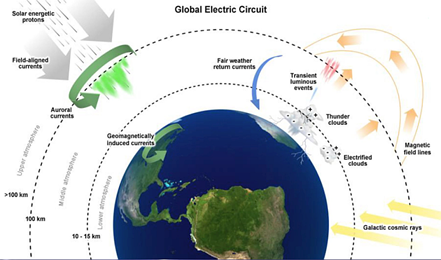
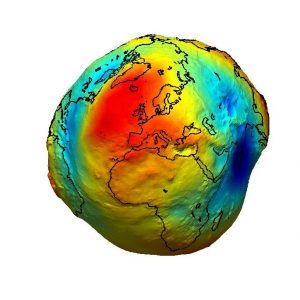
The global electric circuit

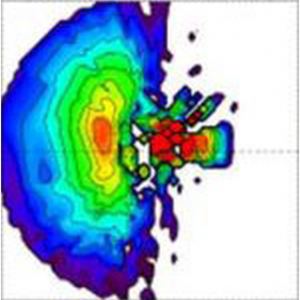
Lightning and red sprites in the Earth’s atmosphere
Contact: Bór József, Bozóki Tamás
Climate dynamics and modeling:
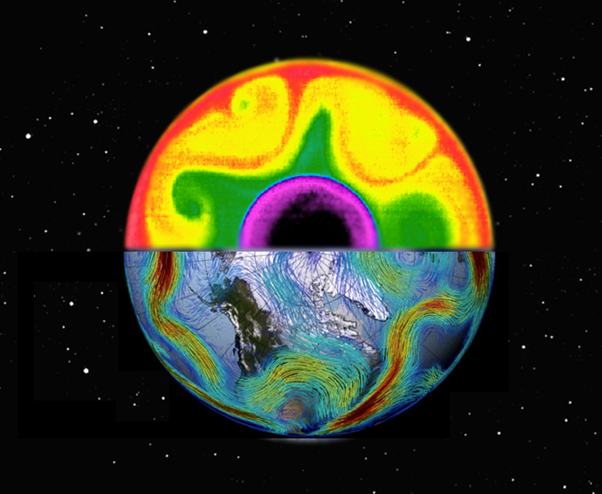
Experimental modeling of environmental flows
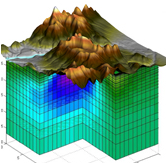
Based on the principle of hydrodynamic similarity, many key aspects of planet-scale geophysical fluid dynamic processes can be effectively modeled using simple laboratory setups. Atmospheric circulation patterns and the statistical properties of weather fluctuations influenced by the equator-to-pole temperature difference and the Coriolis effect are studied using differentially rotating and differentially heated experimental tanks. This approach facilitates the physical modeling of climate change-like non-equilibrium processes on Earth and other planets, and can contribute to the better understanding of a wide range of problems ranging from the superrotation of the atmosphere of Venus, through shear instabilities in Saturn’s north pole to the atmospheric convection of tidally locked exoplanets.
Contact: Vincze Miklós
Chaos theory and numerical climate modeling
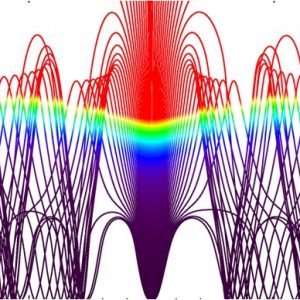
The traditional, time-series-based description of climate cannot be representatively applied in the case of climate change, as it fails to account for the full spectrum of potential behaviors that a given time-dependent climate state can exhibit. To address this gap, we introduced the theory of “parallel climates”, based on the concept of snapshot attractors emerging from chaos theory. When applied to climate change, this theory allows for calculating statistics over a numerical ensemble of climate states. These statistics provide a mathematically well-established description of the climate in a probabilistic sense. Our goal is to use this ensemble-based approach for the understanding of key climate phenomena, such as ENSO (El Niño–Southern Oscillation), the Arctic Oscillation (AO), Atlantic Meridional Overturning Circulation (AMOC), cold air outbreaks, and even extreme climate events. This approach offers a comprehensive framework for studying the complex, nonlinear nature of climate.
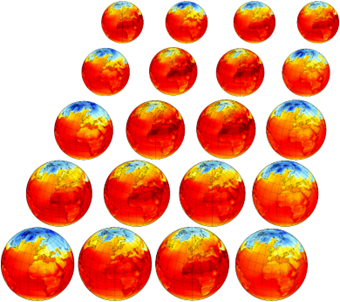
Numerical illustration of “Parallel climates” in climate model PlaSim.
Contact: Herein Mátyás
Low frequency acoustic signals:
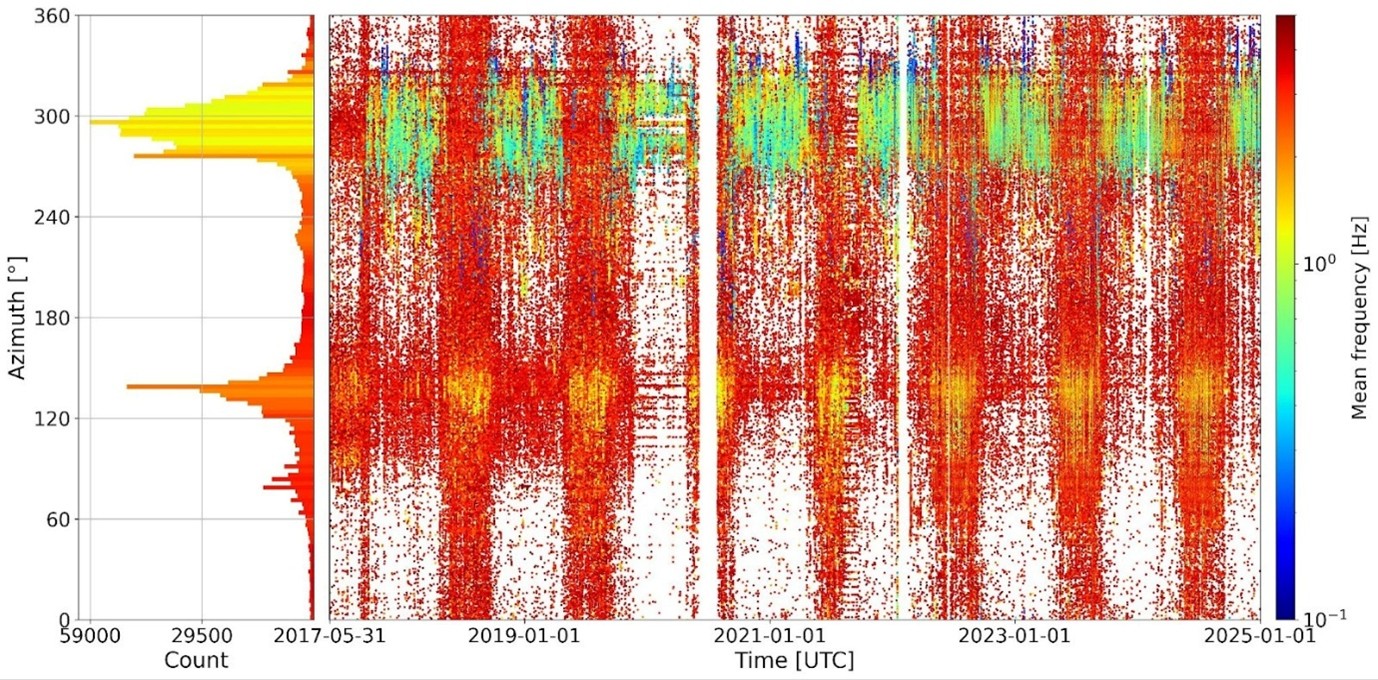
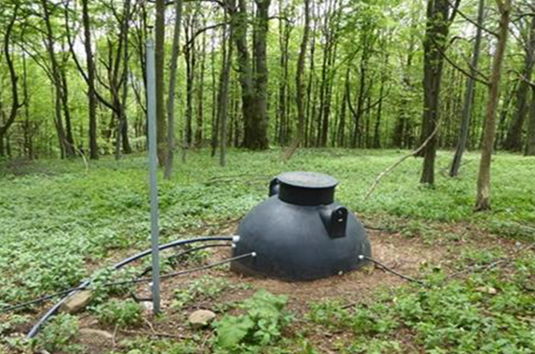
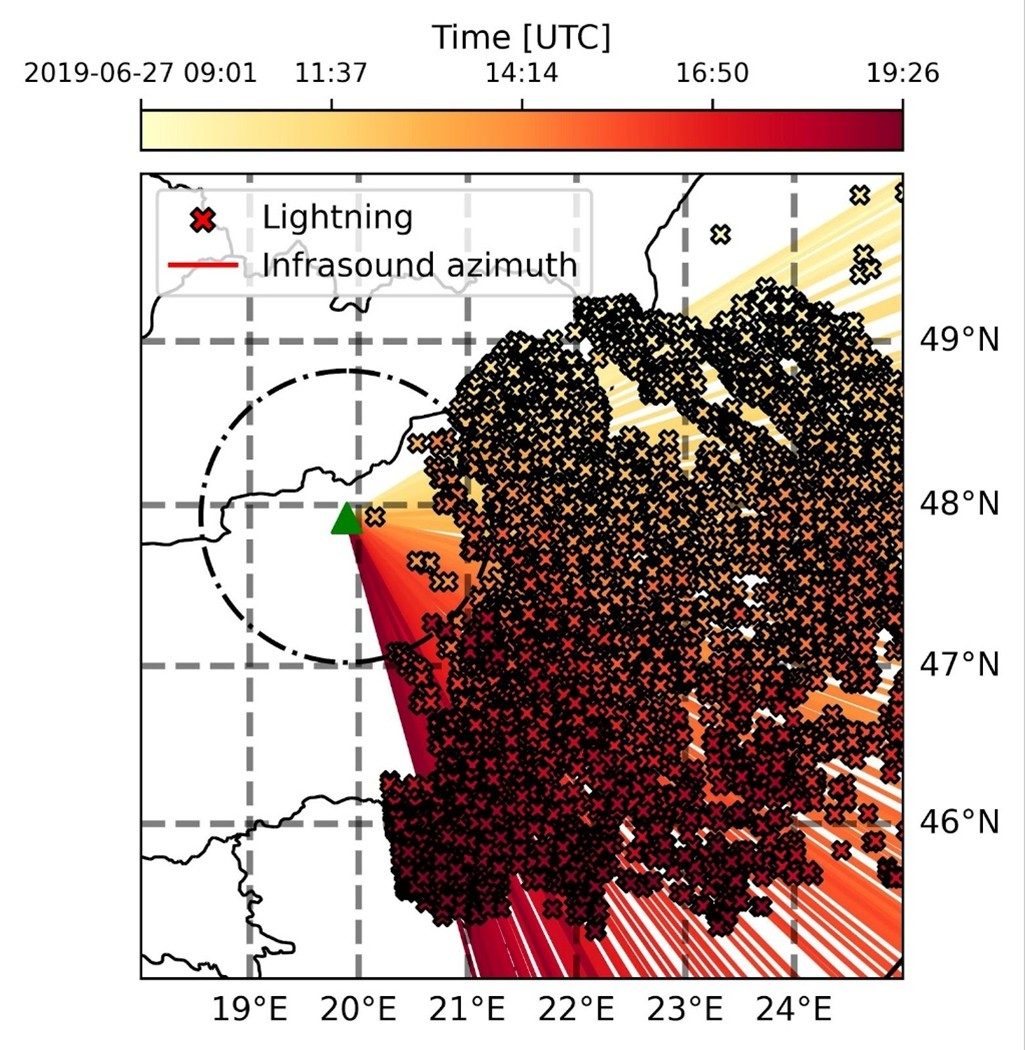
Low frequency (typically 0.01-20 Hz) acoustic signals propagating through the atmosphere are also known as infrasound. As the association of such signals to their sources (e.g., to lightning activity) usually requires ground truth information, a method which relies on the correlation of lightning distribution and infrasound detections is routinely utilised. Near (<50 km) to the Hungarian infrasound array (Piszkés-tető) we are also able to recognise individual lightning strokes in the pressure records.
Contact: Pásztor Marcell
Atmosperic greenhouse gases:
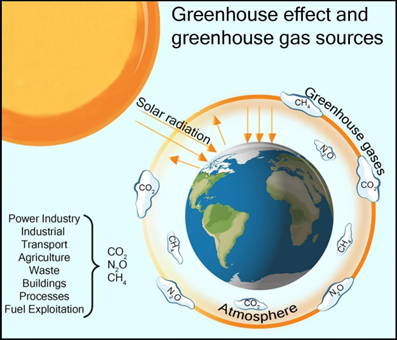
Monitoring the near-surface sources, concentration, and transport of greenhouse gases (e.g., CO2, CH4) enables us to study the variation of emission rates from natural and human activity-related sources in Hungary, and to determine the geographical distribution of emission intensity over a larger area via participating in a European research infrastructure network, the integrated carbon observation system (ICOS).
Filonchyk et al., 2024.
Contact: Haszpra László